


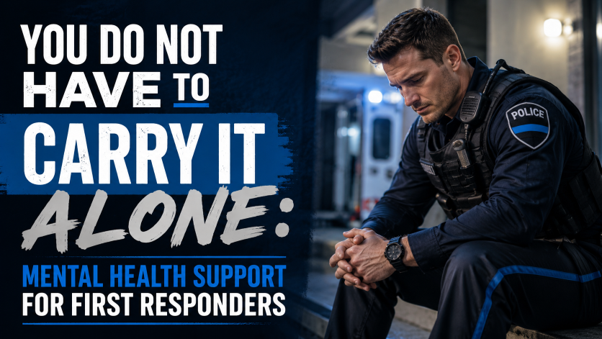
First responders are trained to keep moving.
You show up when people are scared, overwhelmed, injured, unsafe, grieving, or in crisis. You step into moments most people hope they never have to witness. You make decisions quickly. You stay calm when the situation around you is anything but calm. You do the job because people depend on you.
But what happens when the job starts following you home?
Maybe it shows up as poor sleep. Maybe your patience is shorter than it used to be. Maybe you feel emotionally distant from the people you love. Maybe you are exhausted, but you cannot fully relax. Maybe you are still functioning, still working, still showing up, but something inside feels heavier than it used to.
If that feels familiar, you are not alone.
And you do not have to wait until you are in crisis to reach out for support.
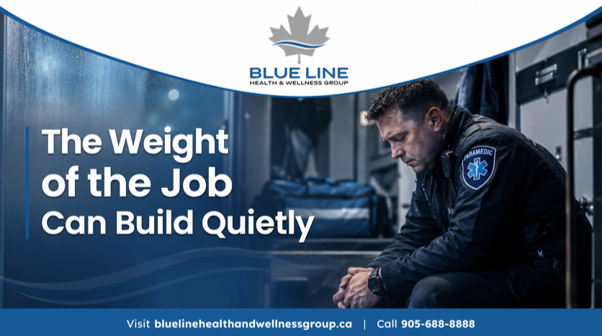
The Weight of the Job Can Build Quietly
For many first responders, frontline professionals, and veterans, stress does not always arrive all at once. It often builds over time.
One difficult call. One intense shift. One scene that stays in your mind. One stretch of long hours. One moment where you had to push your own reaction aside because someone else needed you to stay focused.
Then another.
Then another.
Over time, the body and mind can start carrying more than you realize. You may not think of it as burnout, operational stress, or trauma exposure. You may just think, “I’m tired,” “I’m irritated,” “I need to push through,” or “This is part of the job.”
And in some ways, pushing through may have helped you survive the demands of the work.
But constantly pushing through can come at a cost.
The signs are not always dramatic. Burnout does not always look like breaking down. Sometimes it looks like going quiet. Feeling numb. Sleeping poorly. Snapping at people you care about. Avoiding conversations. Losing interest in things that used to help you reset. Sitting in the driveway a little longer before going inside. Feeling like you are present physically, but not fully there emotionally.
These experiences do not mean you are weak.
They may mean your system has been carrying too much for too long.
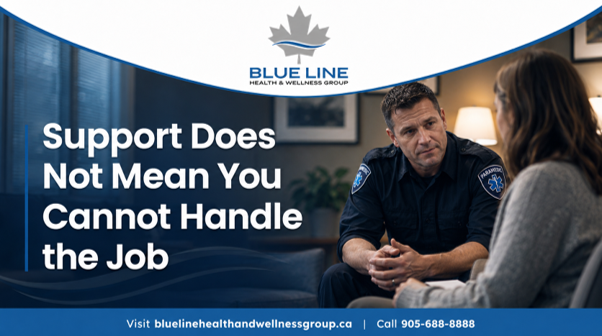
Support Does Not Mean You Cannot Handle the Job
In first responder culture, asking for support can feel complicated.
Many people in service-based roles are used to being the helper, not the person receiving help. You may be surrounded by people who understand the pressure of the work, yet still feel like you have to keep certain things to yourself. You may worry that opening up will make you seem less capable. You may wonder whether what you are experiencing is “bad enough” to talk to someone.
But support is not a sign that you cannot handle the job.
Support can be one of the ways you continue to handle the job without carrying everything alone.
Mental health support does not have to mean you are falling apart. It does not have to mean something is wrong with you. It does not have to mean you are at a breaking point.
Sometimes support simply means having a private place to sort through what has been building. A place where you do not have to over-explain the nature of the work. A place where your stress, reactions, exhaustion, or emotional shutdown can be met with understanding instead of judgment.
For first responders, that kind of support matters.
Because the work is different. The exposure is different. The expectations are different. The culture is different. And the support should recognize that.
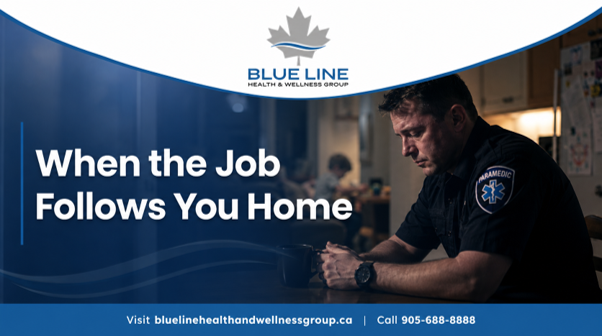
When the Job Follows You Home
One of the hardest parts of service-based work is that the shift may end, but the impact does not always end with it.
You may leave the scene, station, department, hospital, vehicle, or workplace, but still carry the sights, sounds, tension, decisions, or emotions from the day. You may try to switch into family mode, partner mode, parent mode, or regular life, but your body still feels like it is on duty.
This can affect more than your mood.
It can affect sleep, relationships, focus, communication, patience, and your ability to feel calm. You may find yourself withdrawing from people, not because you do not care, but because you do not have the energy to explain what is going on. You may feel disconnected from your own emotions, or feel like the only emotions that come through clearly are frustration or exhaustion.
For families, this can be confusing too.
Loved ones may notice changes before you are ready to talk about them. They may see the distance, irritability, fatigue, or silence and not know how to help. They may want to support you, but feel like they are guessing. This is why first responder mental health is not only about the individual. The weight of the work can affect the people closest to you as well.
Support can help create language for what is happening. It can help you understand what you are carrying. It can help you explore what you need next, even if you are not sure where to begin.

You Do Not Need to Know What Service You Need
One of the biggest barriers to getting support is thinking you need to have everything figured out before you reach out.
You do not.
You do not need to know whether what you are experiencing is burnout, trauma, stress, anxiety, grief, emotional fatigue, or something else. You do not need to know what type of appointment, service, or support option is the right fit. You do not need to have the perfect words ready.
The first step can simply be a conversation.
That conversation can help you identify what has been going on, what feels difficult right now, and what kind of support may make sense. For some people, that may involve counselling or psychotherapy. For others, it may begin with learning more about operational stress, exploring decompression support, involving family support, or finding a way to reconnect with wellness before things feel unmanageable.
Starting does not have to be overwhelming.
It can be private. It can be calm. It can be one step.

Built for Those Who Serve
Blue Line Health & Wellness Group was created with first responders, frontline professionals, veterans, and their families in mind.
That matters because support feels different when the environment understands the audience it is serving. Many first responders do not want to walk into a space where they feel like they have to explain the realities of the job from the ground up. They want professionalism, privacy, respect, and care that recognizes the unique emotional load of service-based work.
The goal is not to pressure you into a path before you are ready.
The goal is to help you find a starting point.
Whether you are feeling burned out, detached, exhausted, irritable, overwhelmed, or simply not like yourself, support is available. Whether the job has started affecting your sleep, your relationships, your mood, or your ability to relax, those signs are worth paying attention to.
You do not have to minimize what you are experiencing just because you are still functioning.
You do not have to wait for a crisis.
And you do not have to carry it alone.
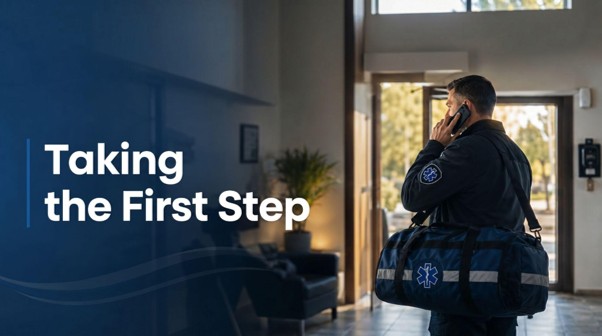
Taking the First Step
Reaching out can feel like a big step, especially if you are used to handling things privately. But the first step does not have to be complicated.
It may be visiting the website to learn more. It may be calling the team. It may be asking a question. It may be saying, “I am not sure where to start, but I think I need support.”
That is enough.
You do not need to have the right words. You do not need to explain everything at once. You do not need to be in crisis to deserve care.
If the job is following you home, if you feel like you are carrying more than people realize, or if something in you knows it may be time to talk, support can start here.
You are not alone.
Not sure where to start? Visit https://bluelinehealthandwellnessgroup.ca/ or call 905-688-8888 to connect with the team.