Blue Line

Category: ‘blog’

TRAUMA-INFORMED THERAPY: WHAT TO EXPECT

August 28, 2026 Posted by webdesigner

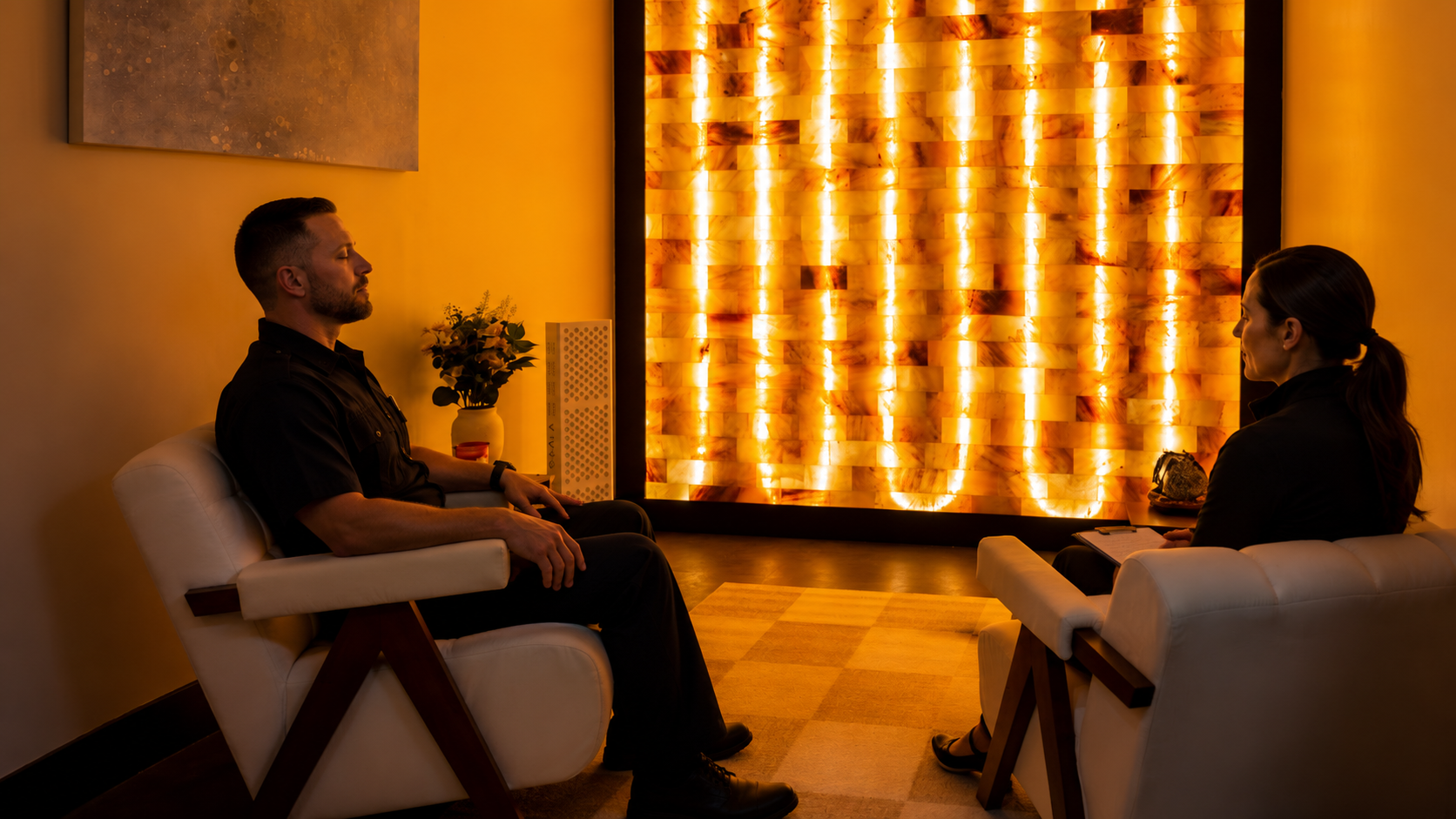
Therapist and client in a Blue Line counselling room beside the title Trauma-Informed Therapy: What to Expect.

TRAUMA-INFORMED THERAPY: WHAT TO EXPECT

A PRACTICAL GUIDE TO STARTING THERAPY

Many people delay therapy because they imagine being asked to describe the most difficult event of their life before they feel ready. Trauma-informed psychotherapy is designed to work differently. It recognizes that trauma and chronic stress can affect sleep, concentration, relationships, emotional regulation, physical tension and a person’s sense of safety – and it builds the process around respect, choice and readiness.

You do not need a PTSD diagnosis to seek this kind of support. Blue Line Health & Wellness Group provides individualized counselling for concerns that may include repeated trauma exposure, operational stress injuries, anxiety, depression, burnout, grief, relationship strain and the effects of high-stress work. The approach is not about forcing a label or rushing disclosure. It is about creating conditions in which meaningful work can happen safely.

IMPORTANT: Trauma-informed describes how care is delivered. Your clinician will still recommend specific therapy methods based on your needs, goals and professional assessment.

BLUE LINE HEALTH & WELLNESS GROUP  |  905-688-8888  |  bluelinehealthandwellnessgroup.ca

Therapist and client sitting at a respectful distance in a private Blue Line counselling room

  1. Safety Comes Before the Story

A trauma-informed therapist does not assume that talking more, faster, is automatically better. The first priority is an environment that feels physically and emotionally safe. That can include a calm private room, clear explanations, predictable boundaries, respectful communication and a conversation about confidentiality and its professional limits.

Government of Canada guidance emphasizes safe environments because care can unintentionally cause harm when people feel judged, controlled, touched without permission or pressured to disclose. A safer beginning gives you time to understand the process and decide whether the therapeutic relationship feels workable.

You can ask what will happen in a session and why an exercise is being suggested.

You can identify situations, language or environmental details that make it harder to feel safe.

You can pause, take a break or say that you are not ready to discuss something.

BLUE LINE HEALTH & WELLNESS GROUP  |  905-688-8888  |  bluelinehealthandwellnessgroup.ca

Therapist and client collaboratively discussing options in a real Blue Line office.

  1. You Remain Part of Every Decision

Trauma often involves a loss of control. Therapy should not repeat that experience. In trauma-informed care, clients remain active participants in the goals, pace and direction of treatment. Your clinician brings professional knowledge; you bring knowledge of your life, priorities, limits and what has or has not helped before.

Blue Line describes its counselling plans as individualized and may draw from cognitive, emotion-focused, somatic or body-based approaches, as well as support for PTSD, operational stress injuries, stress and burnout. “Individualized” should mean more than selecting a technique: the plan should make sense to you and be reviewed as your needs change.

Expect collaborative goal-setting rather than a fixed one-size-fits-all program.

Ask about alternatives when a strategy feels unhelpful or too intense.

Discuss practical priorities such as sleep, anger, concentration, relationships or returning to daily routines.

BLUE LINE HEALTH & WELLNESS GROUP  |  905-688-8888  |  bluelinehealthandwellnessgroup.ca

Client speaking with a non-judgmental therapist, with an unmarked work jacket nearby.

  1. Protective Reactions Are Understood in Context

Trauma-informed therapy shifts the question from only “What is wrong with me?” toward “What happened, how did I adapt and what do I need now?” Reactions such as staying constantly alert, avoiding reminders, shutting down emotionally, becoming irritable or struggling to trust may have developed as attempts to protect you or help you function under pressure.

Understanding a reaction in context does not mean every behaviour is helpful today, and it does not replace assessment. It reduces shame so you and your clinician can examine the pattern more accurately. The goal is to recognize the strength and purpose inside old coping strategies, then build options that better fit your present life.

Patterns are explored without treating them as character flaws.

Strengths and survival skills are identified alongside areas that need change.

The focus stays on practical understanding, responsibility and new choices.

BLUE LINE HEALTH & WELLNESS GROUP  |  905-688-8888  |  bluelinehealthandwellnessgroup.ca

Therapist and client practising a simple grounding breath in a warm Blue Line wellness room.

  1. Therapy Does Not Have to Begin With Maximum Disclosure

You may eventually decide to explore painful events in detail, but that does not have to happen in the first appointment. Public Health Agency of Canada guidance notes that disclosure is not the goal of a trauma-informed approach and that people can receive appropriate support without revealing their full history.

Early sessions may focus on what is happening now: sleep, triggers, emotional regulation, communication, coping skills, daily functioning and goals. Blue Line explains that therapy can be paced around the client’s needs and readiness, with safety and trust established before more difficult experiences are explored. Pacing is not avoidance when it is intentional and clinically guided; it is part of building enough stability to do useful work.

Share only what is necessary to begin identifying your current concerns and goals.

Agree on ways to signal when you need to slow down or change direction.

Review readiness over time instead of treating it as a one-time decision.

BLUE LINE HEALTH & WELLNESS GROUP  |  905-688-8888  |  bluelinehealthandwellnessgroup.ca

Two adults walking together outside Blue Line Health & Wellness Group after an appointment.

  1. The Body and Nervous System Are Part of the Conversation

Trauma and chronic stress are not experienced through thoughts alone. People may notice muscle tension, disrupted sleep, a racing heart, numbness, exhaustion, difficulty concentrating or a body that remains on alert after the immediate demand has passed. These responses can be discussed and addressed as part of therapy rather than dismissed as weakness.

Depending on assessment, comfort and goals, Blue Line notes that care may include somatic or body-based therapeutic approaches alongside cognitive and emotion-focused work. Simple skills might involve noticing physical cues, grounding attention or practising paced breathing. Blue Line’s separate wellness services may complement professional care when appropriate, but they are not replacements for psychotherapy, medical treatment or emergency support.

A technique should be explained and offered collaboratively, not imposed.

You do not need to use every clinic service to receive an individualized care plan.

Tell your clinician if a body-focused exercise feels uncomfortable or activating.

BLUE LINE HEALTH & WELLNESS GROUP  |  905-688-8888  |  bluelinehealthandwellnessgroup.ca

Progress Is Measured in Real Life

  1. Progress Is Measured in Real Life

Recovery is rarely a straight line, and it is not measured only by whether difficult memories disappear. More useful signs may include sleeping more consistently, recovering faster after a trigger, noticing tension earlier, communicating more clearly, feeling present with family, setting boundaries or returning to activities that matter.

Blue Line’s service model looks beyond symptom reduction toward functioning, relationships, resilience and quality of life. Progress should connect to the life you want to live on and off the job. Goals can be revised as circumstances change, and setbacks can be treated as information rather than proof that therapy is failing.

Choose a few observable goals that matter in your daily life.

Review what is improving, what remains difficult and whether the approach still fits.

Expect gradual skill-building and honest adjustment, not an instant transformation.

BOTTOM LINE: Trauma-informed psychotherapy is not about pushing you through the hardest material. It is a collaborative way of helping you build safety, understanding and practical capacity to move forward.

BLUE LINE HEALTH & WELLNESS GROUP  |  905-688-8888  |  bluelinehealthandwellnessgroup.ca

A NEXT STEP THAT DOES NOT RUSH THE PROCESS

Support Can Begin Before You Have All the Words

Trauma-informed psychotherapy may be relevant whether you are dealing with one event, cumulative exposure, operational stress, burnout, anxiety, low mood, grief, relationship strain or a persistent feeling that you cannot fully switch off. A diagnosis is not required simply to start a conversation.

Blue Line Health & Wellness Group offers confidential, individualized counselling delivered by licensed mental-health professionals experienced in supporting First Responders, frontline professionals, veterans, families and community members. To learn more, book securely online or call 905-688-8888.

Learn about the service: Trauma-Informed Psychotherapy at Blue Line

URGENT SUPPORT: Psychotherapy appointments are not emergency services. If there is immediate danger, call 911. If you or someone you know is thinking about suicide in Canada, call or text 9-8-8, available 24/7.


Beyond Talk Therapy: 7 Ways Integrated Care Can Support First Responders and Veterans

August 11, 2026 Posted by webdesigner

Integrated Care for First Responders and Veterans

Beyond Talk Therapy: 7 Ways Integrated Care Can Support First Responders and Veterans

For people who work in high-stress, service-based roles, recovery is not always as simple as getting more rest or talking through one difficult experience.

The impact of the work can show up in different ways. It may affect your sleep, mood, relationships, concentration, energy, patience, or ability to relax. You may feel emotionally drained while your body still feels alert. You may understand what is happening logically, yet still find it difficult to settle your nervous system after a shift.

That is why mental health care is not one-size-fits-all.

At Blue Line Health & Wellness Group, the goal of integrated care is to look at the whole person. Evidence-based mental health services can be combined with supportive wellness options in a confidential, trauma-informed environment created for First Responders, frontline professionals, veterans, families, and members of the Niagara community.

You do not need to use every service. You do not need to know exactly what you need before you begin. Integrated care simply creates more than one possible pathway forward.

Care Starts With Feeling Safe and Understood

  1. Care Starts With Feeling Safe and Understood

For many First Responders and veterans, opening up is not the hardest part. The harder part may be wondering whether the person listening will understand the realities of the work.

Service-based careers can involve repeated exposure to crisis, injury, loss, danger, urgency, and responsibility. They can also come with a professional culture that values composure, privacy, and the ability to keep moving. When support overlooks that context, it can feel disconnected from the person seeking care.

Trauma-informed psychotherapy begins with safety, trust, choice, collaboration, and respect. It recognizes that reactions such as hypervigilance, emotional numbness, avoidance, irritability, poor sleep, or difficulty relaxing may be understandable responses to prolonged stress or trauma exposure.

The purpose is not to pressure you to tell your whole story at once. It is to create a private, supportive place where you can begin at a pace that feels manageable.

Clinical Support Can Be Tailored to You

  1. Clinical Support Can Be Tailored to You

Two people can work in similar roles and carry the impact very differently.

One person may be dealing with a specific traumatic incident. Another may be experiencing years of accumulated operational stress. Someone else may be struggling with grief, anxiety, depression, burnout, relationship strain, a return to work, or the transition out of a service-based career.

Individualized mental health and psychological care makes room for those differences. Depending on a person’s needs, support may include individual psychotherapy, trauma-focused therapy, stress management, grief and loss counselling, couples or family therapy, crisis stabilization, or occupational mental health support.

Care can also change over time. The support that helps you begin may not be the same support you need later. A coordinated clinical team can help review what is working, what still feels difficult, and what the next stage of care may look like.

The Mind and Body Are Part of the Same Recovery

  1. The Mind and Body Are Part of the Same Recovery

Stress is not only something you think about. It can also be something your body carries.

After repeated exposure to high-pressure situations, the nervous system may have difficulty moving out of a state of readiness. Even when the immediate danger is over, your body may still feel tense, restless, alert, or unable to fully settle. This can affect sleep, breathing, concentration, digestion, energy, and emotional regulation.

An integrated care approach recognizes the connection between mental health and physiological regulation. Evidence-based therapy can help you process experiences, understand patterns, and build coping skills. Supportive mind-body services can create additional opportunities for rest, grounding, and nervous-system calming.

These approaches do not compete with each other. When appropriate, they can be coordinated as different parts of an individualized wellness plan.

PEMF Therapy May Support Nervous-System Regulation

  1. PEMF Therapy May Support Nervous-System Regulation

Pulsed Electromagnetic Field therapy, commonly called PEMF therapy, uses low-frequency electromagnetic waves as a non-invasive wellness service.

At Blue Line Health & Wellness Group, PEMF therapy may be used as a complementary option to support relaxation, sleep patterns, nervous-system regulation, emotional resilience, and relief from chronic stress or mental fatigue.

For someone who feels mentally exhausted but physically unable to switch off, a quiet, structured wellness session may offer a useful space to pause. The goal is not to replace psychotherapy, medical care, or other recommended treatment. It is to provide another supportive tool within a broader plan.

As with any wellness service, suitability can depend on a person’s health history, current treatment, and individual needs. The team can help explain what a session involves and whether it may be appropriate for you.

Red Light Therapy Can Complement Mental Wellness

  1. Red Light Therapy Can Complement Mental Wellness

Red light therapy, also known as photobiomodulation, uses specific wavelengths of red and near-infrared light to support cellular function and physiological regulation.

As part of a holistic mental wellness plan, Blue Line describes red light therapy as a calming, non-invasive service that may support mood regulation, stress reduction, sleep quality, cognitive clarity, and nervous-system recovery.

The experience also creates something that can be difficult to find in a demanding schedule: protected time to be still.

For First Responders, frontline professionals, and veterans who spend much of their time responding to other people’s needs, intentionally slowing down can be an important part of reconnecting with their own wellbeing. Red light therapy may be used alongside counselling and other therapeutic services when appropriate.

salt room

  1. A Salt Room Can Create Space to Slow Down

Sometimes the first step toward feeling more regulated is having an environment that asks nothing of you.

Salt room therapy, or halotherapy, takes place in a quiet, restorative space designed to encourage relaxation and stress relief. For mental and emotional wellbeing, the experience may support mindfulness, calmer breathing, mental clarity, and a temporary reduction in feelings of tension or anxiety.

The value of the room is not that it makes difficult experiences disappear. It is that it can create a pause from constant stimulation, decision-making, screens, noise, and responsibility.

For someone whose nervous system has been on alert for an extended period, that pause may feel significant. Salt room therapy can be used independently as a wellness service or combined with counselling and other supports as part of an integrated plan.

Veterans Deserve Care That Understands Service

  1. Veterans Deserve Care That Understands Service

Military service can shape mental health, family life, identity, relationships, and the transition into civilian life. Veterans deserve support that recognizes those experiences without requiring them to explain the culture of service from the beginning.

Blue Line Health & Wellness Group provides Veterans Affairs Canada disability assessments through a collaborative process involving mental health and medical professionals. The assessment can include a detailed psychosocial review, standardized screening measures, a medical review, a diagnostic opinion, treatment recommendations, and the documentation required for a VAC application or reassessment.

Ongoing treatment is also available for concerns such as PTSD, operational stress injuries, anxiety, depression, grief, relationship challenges, and adjustment to civilian life. In-person and virtual care can help make support more accessible, while eligible treatment may be direct billed through Medavie Blue Cross.

The purpose is to make the process clearer, more coordinated, and more respectful for the people who have served.

You Do Not Need to Choose a Path Alone

An integrated model does not mean that everyone follows the same program. It means there are different ways to begin.

For some people, the right starting point may be psychotherapy. For others, it may be an assessment, family support, a complementary wellness service, or a simple conversation about what has been happening. Some people may benefit from a combination of services over time. Others may need only one form of care.

You do not need to arrive with a diagnosis. You do not need to know which appointment to book. You do not need to wait until stress becomes a crisis.

The first step can simply be asking, “Where should I start?”

Blue Line Health & Wellness Group was created to provide professional, confidential, trauma-informed care for First Responders, frontline professionals, veterans, families, and the Niagara community.

To learn more, visit bluelinehealthandwellnessgroup.ca or call 905-688-8888 to connect with the team.

You Do Not Have to Carry It Alone: Mental Health Support for First Responders

June 12, 2026 Posted by webdesigner

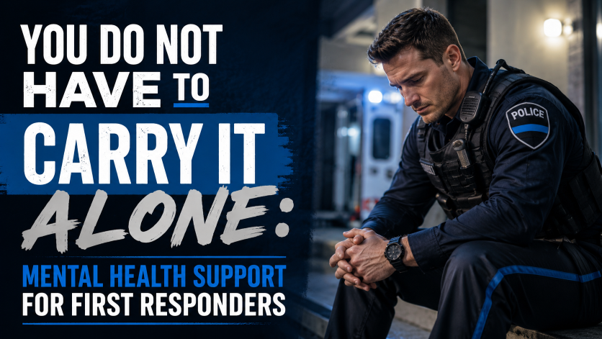
You Do Not Have to Carry It Alone: Mental Health Support for First Responders

you do not have to carry it alone

First responders are trained to keep moving.

You show up when people are scared, overwhelmed, injured, unsafe, grieving, or in crisis. You step into moments most people hope they never have to witness. You make decisions quickly. You stay calm when the situation around you is anything but calm. You do the job because people depend on you.

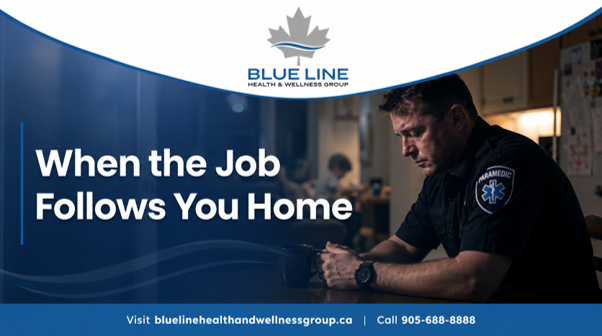
But what happens when the job starts following you home?

Maybe it shows up as poor sleep. Maybe your patience is shorter than it used to be. Maybe you feel emotionally distant from the people you love. Maybe you are exhausted, but you cannot fully relax. Maybe you are still functioning, still working, still showing up, but something inside feels heavier than it used to.

If that feels familiar, you are not alone.

And you do not have to wait until you are in crisis to reach out for support.

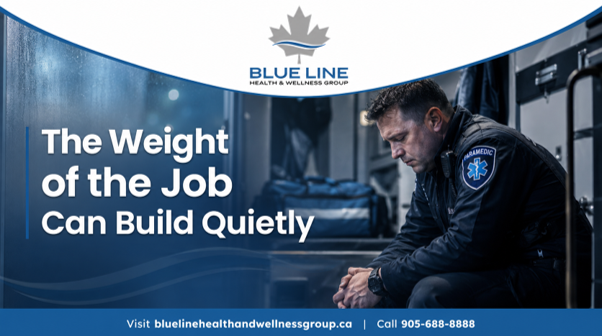
the weight of the job can build quitely

The Weight of the Job Can Build Quietly

For many first responders, frontline professionals, and veterans, stress does not always arrive all at once. It often builds over time.

One difficult call. One intense shift. One scene that stays in your mind. One stretch of long hours. One moment where you had to push your own reaction aside because someone else needed you to stay focused.

Then another.

Then another.

Over time, the body and mind can start carrying more than you realize. You may not think of it as burnout, operational stress, or trauma exposure. You may just think, “I’m tired,” “I’m irritated,” “I need to push through,” or “This is part of the job.”

And in some ways, pushing through may have helped you survive the demands of the work.

But constantly pushing through can come at a cost.

The signs are not always dramatic. Burnout does not always look like breaking down. Sometimes it looks like going quiet. Feeling numb. Sleeping poorly. Snapping at people you care about. Avoiding conversations. Losing interest in things that used to help you reset. Sitting in the driveway a little longer before going inside. Feeling like you are present physically, but not fully there emotionally.

These experiences do not mean you are weak.

They may mean your system has been carrying too much for too long.

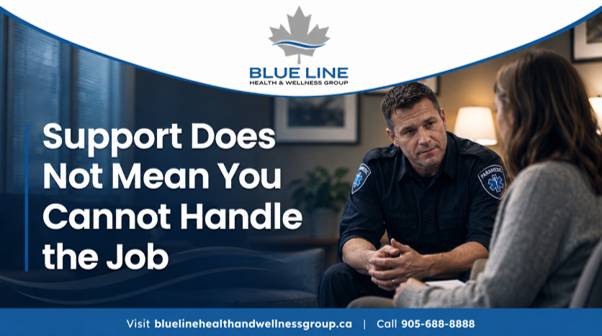
support does not mean you can handle the job

Support Does Not Mean You Cannot Handle the Job

In first responder culture, asking for support can feel complicated.

Many people in service-based roles are used to being the helper, not the person receiving help. You may be surrounded by people who understand the pressure of the work, yet still feel like you have to keep certain things to yourself. You may worry that opening up will make you seem less capable. You may wonder whether what you are experiencing is “bad enough” to talk to someone.

But support is not a sign that you cannot handle the job.

Support can be one of the ways you continue to handle the job without carrying everything alone.

Mental health support does not have to mean you are falling apart. It does not have to mean something is wrong with you. It does not have to mean you are at a breaking point.

Sometimes support simply means having a private place to sort through what has been building. A place where you do not have to over-explain the nature of the work. A place where your stress, reactions, exhaustion, or emotional shutdown can be met with understanding instead of judgment.

For first responders, that kind of support matters.

Because the work is different. The exposure is different. The expectations are different. The culture is different. And the support should recognize that.

when the job follows you home

When the Job Follows You Home

One of the hardest parts of service-based work is that the shift may end, but the impact does not always end with it.

You may leave the scene, station, department, hospital, vehicle, or workplace, but still carry the sights, sounds, tension, decisions, or emotions from the day. You may try to switch into family mode, partner mode, parent mode, or regular life, but your body still feels like it is on duty.

This can affect more than your mood.

It can affect sleep, relationships, focus, communication, patience, and your ability to feel calm. You may find yourself withdrawing from people, not because you do not care, but because you do not have the energy to explain what is going on. You may feel disconnected from your own emotions, or feel like the only emotions that come through clearly are frustration or exhaustion.

For families, this can be confusing too.

Loved ones may notice changes before you are ready to talk about them. They may see the distance, irritability, fatigue, or silence and not know how to help. They may want to support you, but feel like they are guessing. This is why first responder mental health is not only about the individual. The weight of the work can affect the people closest to you as well.

Support can help create language for what is happening. It can help you understand what you are carrying. It can help you explore what you need next, even if you are not sure where to begin.

you do not need to know what service you need

You Do Not Need to Know What Service You Need

One of the biggest barriers to getting support is thinking you need to have everything figured out before you reach out.

You do not.

You do not need to know whether what you are experiencing is burnout, trauma, stress, anxiety, grief, emotional fatigue, or something else. You do not need to know what type of appointment, service, or support option is the right fit. You do not need to have the perfect words ready.

The first step can simply be a conversation.

That conversation can help you identify what has been going on, what feels difficult right now, and what kind of support may make sense. For some people, that may involve counselling or psychotherapy. For others, it may begin with learning more about operational stress, exploring decompression support, involving family support, or finding a way to reconnect with wellness before things feel unmanageable.

Starting does not have to be overwhelming.

It can be private. It can be calm. It can be one step.

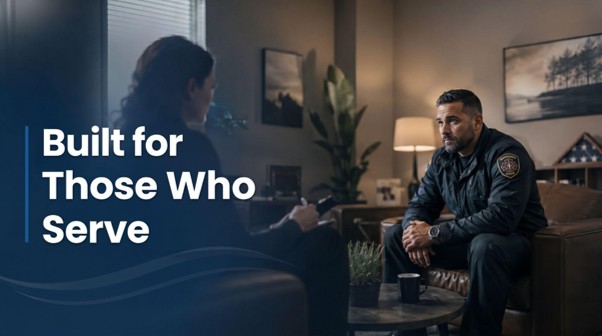
built for those who serve

Built for Those Who Serve

Blue Line Health & Wellness Group was created with first responders, frontline professionals, veterans, and their families in mind.

That matters because support feels different when the environment understands the audience it is serving. Many first responders do not want to walk into a space where they feel like they have to explain the realities of the job from the ground up. They want professionalism, privacy, respect, and care that recognizes the unique emotional load of service-based work.

The goal is not to pressure you into a path before you are ready.

The goal is to help you find a starting point.

Whether you are feeling burned out, detached, exhausted, irritable, overwhelmed, or simply not like yourself, support is available. Whether the job has started affecting your sleep, your relationships, your mood, or your ability to relax, those signs are worth paying attention to.

You do not have to minimize what you are experiencing just because you are still functioning.

You do not have to wait for a crisis.

And you do not have to carry it alone.

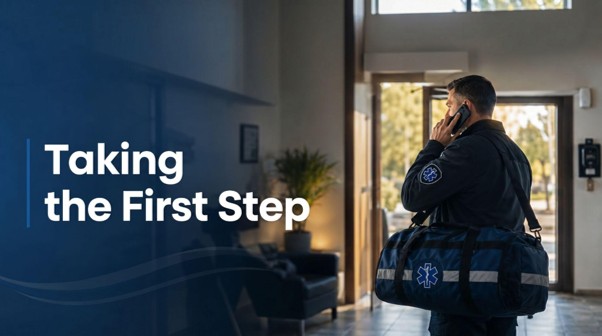
taking the first step

Taking the First Step

Reaching out can feel like a big step, especially if you are used to handling things privately. But the first step does not have to be complicated.

It may be visiting the website to learn more. It may be calling the team. It may be asking a question. It may be saying, “I am not sure where to start, but I think I need support.”

That is enough.

You do not need to have the right words. You do not need to explain everything at once. You do not need to be in crisis to deserve care.

If the job is following you home, if you feel like you are carrying more than people realize, or if something in you knows it may be time to talk, support can start here.

You are not alone.

Not sure where to start? Visit https://bluelinehealthandwellnessgroup.ca/ or call 905-688-8888 to connect with the team.